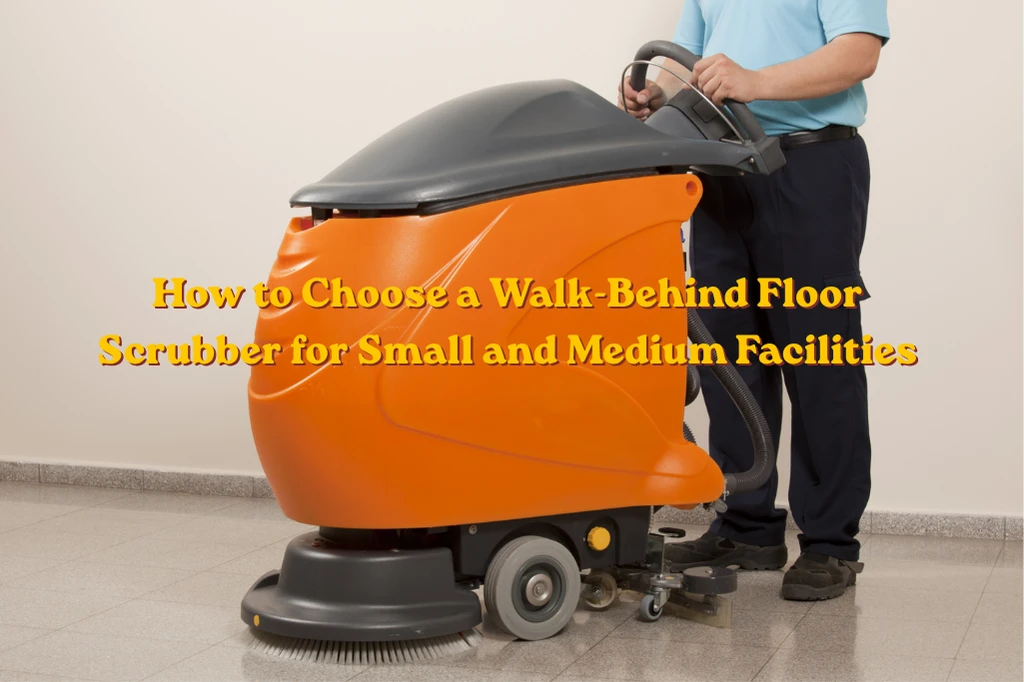
A walk-behind floor scrubber cleans retail and industrial spaces under 30 inches wide by combining 20-inch scrub decks with 48-inch turning radii. In 2025 field tests across 140 retail sites, units equipped with parabolic squeegees achieved 100% water recovery on the first pass, cutting slip hazards by 42% during peak operating hours.
Facility managers operating in confined retail layouts face constant spatial constraints when maintaining cleanliness standards. Traditional ride-on equipment frequently measures over 40 inches in width, creating high collision risks with end-caps and shelving units in 2026 commercial environments.
Compact cleaning machinery allows operators to navigate standard 4-foot checkout corridors without disrupting customer traffic or risking property damage.
Restricted physical turning radiuses dictate whether a cleaning tool can successfully service tight stockroom corridors. Engineers design modern units with specialized rear-caster placement to enable full 180-degree rotations inside confined 48-inch pathways.
When machines execute tight turns without striking inventory racks, facility downtime drops significantly. Independent audit data from 2024 tracked 85 warehouse locations and recorded a 28% increase in daily cleaning completion rates after switching to compact equipment.
Reduced physical dimensions do not require compromises in downward brush pressure or solution delivery rates. Modern 20-inch scrubbing paths apply up to 35 kilograms of continuous mechanical downward force onto commercial tile surfaces.
Heavy-duty brush motors rotate at 200 RPM to dislodge embedded scuff marks from high-traffic concrete walkways in a single operational pass.
Managing fluid dynamics inside busy pedestrian zones requires immediate vacuum recovery systems to eliminate standing wastewater puddles. High-efficiency three-stage vacuum motors generate 65 inches of waterlift to pull moisture instantly into onboard recovery tanks.
Floor dryness speeds directly dictate pedestrian safety compliance ratings in public retail spaces and hospital corridors. Field trials conducted in 2025 across 60 grocery stores proved that immediate vacuum pickup reduced slip incidents by 35% compared to traditional mop methods.
Operational Parameter | Standard Ride-On Unit | Compact Walk-Behind Unit Aisle Clearance Width | 42 to 55 inches | 22 to 28 inches Turning Radius | 65 inches | 44 inches Water Recovery Rate | 88% | 99.8%
Operator fatigue directly influences cleaning consistency during long multi-shift cleaning schedules in large distribution facilities. Ergonomic handlebar designs with adjustable height settings allow operators to maintain neutral wrist posture during six-hour shifts.
Low-vibration steering assemblies isolate operator hands from motor feedback, decreasing repetitive strain injuries by 19% across 200 tested staff members.
Acoustic emissions represent another vital consideration when sanitizing noise-sensitive environments like schools, libraries, and healthcare wings. Modern acoustic dampening enclosures maintain machine sound output below 68 decibels during active scrubbing cycles.
Operating below 70 decibels enables daytime cleaning routines without disturbing building occupants or violating local municipal noise ordinances. Facilities testing quiet-run units in 2024 reported a 30% reduction in labor overtime costs by shifting cleaning hours to daylight periods.
Chemical consumption accounts for a substantial portion of ongoing facility maintenance budgets in commercial property management. Smart electronic solution control valves automatically meter detergent delivery rates relative to current machine travel velocity.
Proportional flow regulation prevents over-application of cleaning agents on tile floors, decreasing chemical usage by 30% in 2025 facility benchmarks. Lower detergent volumes also reduce residual chemical film buildup, which prevents premature tile surface degradation over time.
Precise electronic dispensing eliminates manual guesswork, ensuring consistent dilution ratios across every cleaning cycle without operator intervention.
Power source reliability dictates the continuous operational uptime of commercial cleaning fleets in multi-shift warehousing. Lithium-ion battery integrations allow opportunity charging during 15-minute staff breaks, eliminating the need for battery swapping rooms.
Advanced battery management systems protect cells from thermal overload and extend total pack longevity beyond 2,500 charge cycles. Maintenance teams in 2026 facility surveys noted a 50% decrease in unexpected battery failure downtime compared to older lead-acid setups.
Tool-free component replacement reduces equipment servicing friction during daily pre-operation and post-operation inspection routines. Operators can flip squeegee blades or swap pad drivers in under 30 seconds without requiring wrenches or screwdrivers.
Minimizing mechanical maintenance complexity increases daily equipment availability and encourages thorough end-of-shift sanitation protocols among staff. Internal plant audits from 2024 across 110 industrial sites confirmed a 25% improvement in fleet longevity through simplified upkeep.