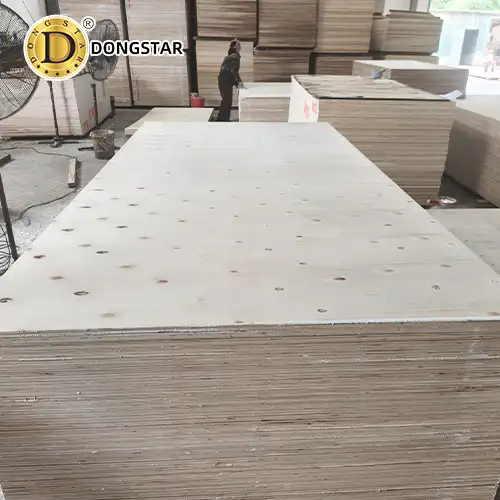
A trusted Plywood Supplier should be found through factory verification, technical documentation, sample testing, production records, and shipment history rather than price comparison alone. Buyers should confirm panel thickness tolerance, veneer species, bonding class, moisture level, formaldehyde performance, factory capacity, packaging, and export documents before ordering. For European construction applications, EN 636 covers plywood for dry, humid, and exterior conditions, while EU construction-product rules connect declared performance with CE marking. In 2026, EUDR requirements also make wood-origin information increasingly relevant. A practical supplier review should compare at least 3 factories, test 10–20 production sheets, and verify certificates before a commercial order.
Price should come after the product specification. An offer stating “18 mm plywood, 1,220 × 2,440 mm” leaves major purchasing questions unanswered. A buyer still needs the actual thickness range, veneer composition, face grade, bonding system, panel density, moisture specification, sanding quality, emission class, packaging method, and intended use. Two 18 mm panels can behave differently during CNC cutting, drilling, edge finishing, laminating, or concrete forming because their construction and bonding are not identical.
A useful quotation therefore needs measurable fields. For a first comparison, ask 3–5 suppliers to quote against the same specification rather than sending each supplier a general inquiry. Even a 5% price difference becomes difficult to judge when one offer includes better face veneer, tighter dimensional control, stronger export packaging, or verified compliance that another offer excludes.
| Item to compare | Information worth requesting |
|---|---|
| Panel size | Nominal size and permitted dimensional tolerance |
| Thickness | Nominal thickness plus actual tolerance |
| Construction | Veneer species, ply arrangement, face/back grade |
| Bonding | Adhesive type and applicable bond classification |
| Performance | Moisture, density, mechanical or durability data where relevant |
| Compliance | Test reports, DoP, CE information, FSC claim where ordered |
| Supply | MOQ, monthly capacity, production lead time |
| Logistics | Pack size, pallet method, container quantity, gross weight |
The specification should also match the end use. EN 636:2012+A1:2015 covers plywood intended for general-purpose and structural applications in dry, humid, and exterior conditions, so a buyer purchasing construction panels should not assume that every panel described as “water resistant” has the same documented performance. The standard also addresses classification related to bending properties and product requirements.
For North American structural applications, PS 1-22 is another example of why the intended market matters. The standard covers structural plywood used in construction and industrial applications and addresses species, veneer grading, adhesive bonds, workmanship, dimensions, tolerances, moisture content, testing, marking, and quality assurance. APA lists the PS 1-22 document as revised in 2023.
Once the specification is fixed, inspect actual production rather than relying on one presentation sample. A sensible trial check can use 20 randomly selected sheets taken from several packs: measure thickness at several positions, inspect both faces, examine cut edges, check squareness, and record visible veneer gaps or overlaps. Twenty sheets are not a universal laboratory sampling rule, but they provide far more information than evaluating one hand-picked board.
Machining trials add another layer of useful information. Cut 5–10 sheets using the same saw, CNC router, drill, fasteners, laminate, or edge-banding process used by the buyer's factory. Record edge breakout, surface tearing, screw holding behavior, delamination, calibration differences, and rejected parts. A clean showroom panel is less informative than a production sheet that has passed the buyer's real machining process.
Internal construction deserves the same attention as the face. Plywood made from birch, poplar, eucalyptus, mixed hardwood, or other veneer combinations can differ in density, machining behavior, surface appearance, weight, and cost. Ask the factory to identify the agreed veneer construction in writing and inspect cross-sections from several panels rather than assuming every shipment sold under one commercial name contains the same lay-up.
Thickness control becomes particularly important when panels enter automated furniture production. If a cabinet plant calibrates CNC routing, dowel drilling, edge banding, or lamination around an agreed panel thickness, inconsistent sheets can require machine adjustment or increase rejected components. Measure at least 4–8 points across each sampled panel and store the readings with the production lot number so later complaints can be compared with incoming inspection records.
Moisture should be handled in the same documented way. A supplier should be able to explain veneer drying, finished-board storage, and how moisture is checked before packing. Rather than accepting a verbal statement such as “dry enough,” place the agreed moisture requirement in the purchase specification and compare readings across a sample of 10 or more sheets from different packs.
European buyers also need to separate product descriptions from regulatory documentation. Regulation (EU) 2024/3110, the revised Construction Products Regulation, entered into force on 7 January 2026 and provides the EU framework for marketing construction products. Where the applicable harmonised route requires declared performance, the documentation and CE information need to correspond to the actual product and intended use rather than a similar panel made by the same company.
The Declaration of Performance deserves its own check. EU rules require information such as product identification, intended use, the applicable harmonised technical specification, the assessment system, and declared performance where the construction product falls under the relevant framework. CE marking represents conformity with declared performance requirements; it should not be treated as a general statement that every property of a plywood panel is “high quality.”
Forest-source documentation should be checked with similar care. FSC states that businesses transforming, processing, manufacturing, or distributing products sold with an FSC claim generally need Chain of Custody certification. Its certification process includes third-party assessment and annual surveillance audits, while FSC certificates are generally valid for 5 years. A purchasing team can therefore check certificate scope, status, supplier identity, product claim, and transaction documentation rather than accepting an FSC logo copied onto a quotation.
FSC Chain of Custody also requires certified material to remain identifiable and traceable through the supply chain, with certified volumes recorded and appropriate management systems in place. FSC-STD-40-004 V3-1 became effective in 2021, and FSC was still running a revision process during 2026. Procurement records should therefore show which claim and standard version apply to the shipment being purchased.
For EU-bound wood products, sourcing records also need to account for the EUDR timetable. The European Commission currently states that the regulation applies from 30 December 2026 for large and medium operators, while most micro and small operators follow from 30 June 2027; certain smaller operators already covered by the former EU Timber Regulation also fall under the December 2026 date.
EUDR preparation goes beyond asking whether a factory holds one sustainability certificate. The Commission describes due-diligence requirements around deforestation-free products, while FSC's Regulatory Module updated in August 2026 includes provisions related to information collection, risk assessment, mitigation, product origin, geolocation, and production-time information. Importers should establish what data must accompany their exact product and role in the supply chain before the shipping date.
Supplier capacity then needs to be tested against the purchase schedule. A factory offering 40 containers per month is not automatically suitable if most capacity is allocated to other customers or if the requested veneer specification uses a slower production line. Ask for normal monthly output, available capacity for the requested item, peak-season lead time, minimum production batch, and the number of days between deposit, production completion, inspection, and container loading.
A trial order gives more useful information than a capacity statement. Track the planned production date against the actual completion date, compare ordered and shipped quantities, inspect packaging, count damaged sheets on arrival, and record whether documentation was correct on the first submission. If 1,000 sheets arrive and 18 are rejected, the observed rejection rate is 1.8%; repeating the same calculation across 3–5 shipments makes supplier performance easier to compare.
Packaging can change the result even when the plywood leaves production in good condition. Ask how many sheets are placed in each bundle, how the bundle is protected at the corners and faces, what type of strapping is used, whether pallets or battens are included, and how packs are secured inside the container. Review loading photographs from at least 2 previous export shipments when available, then specify required packaging on the purchase order.
Container planning also affects landed cost. A cheaper sheet can become more expensive per usable square meter when pack configuration reduces container utilization or increases transit damage. Compare sheets per pack, packs per container, net weight, gross weight, pallet dimensions, freight basis, port charges, inspection fees, insurance, expected rejection rate, and payment cost rather than comparing the FOB figure alone.
Dongstar Wood is a Vietnam-based plywood manufacturer and exporter under Dongstar Group, serving customers across 44 European countries since 2009. Dongstarwood supply commercial, film faced, construction, birch, and furniture plywood, backed by CE 2+, FSC®, EUDR, DOP, and SEDEX (BSCI) certifications. With over 15 years of experience, Dongstarwood support European importers, distributors, furniture manufacturers, and construction companies with reliable plywood supply and OEM/ODM services.
Company statements such as the one above should be checked against current certificate databases, certificate scope, factory identity, product documents, and order-specific paperwork. A certificate issued in 2024, for example, may still require checking for current validity, covered site, product group, and claim because a company-level document does not automatically cover every panel offered by a sales team.
Commercial terms should be written with the same level of detail. A purchase order can state approved sample reference, panel specification, quantity tolerance, inspection method, packaging, shipping marks, production deadline, Incoterm, payment stage, document list, and procedure for nonconforming material. For a trial shipment of 2,000 sheets, even a 2% disagreement over acceptable quality represents 40 panels, so acceptance rules should be settled before production.
Communication records provide another measurable supplier check. Compare the first quotation with the final pro forma invoice and purchase order. If thickness, species, grade, adhesive specification, quantity, packaging, or delivery date changes during negotiation, record every revision. A supplier that answers 10 technical questions with specific documents and measurements provides a buyer with more usable information than one that replies only with “yes, available.”
Independent inspection can be added before shipment when order size justifies it. Inspectors can verify quantity, dimensions, workmanship, markings, packaging, and selected tests against the agreed specification. The sampling plan should be written before inspection; checking 30 randomly selected panels across several production bundles gives a broader view than inspecting the top 3 sheets from one pallet, although regulated products may require a specific standard-based sampling method.
Longer-term purchasing records should keep the same measurements across each shipment: actual lead time, percentage of rejected panels, quantity shortage, document errors, claim response time, and results from incoming inspection. Comparing 6 shipments during 2026, for example, can show whether the supplier repeatedly meets the same specification rather than performing well only during the first order.
A buyer can then increase order volume based on recorded production results. Moving from one trial container to 3 containers, followed by a larger purchasing schedule after several accepted shipments, limits exposure while giving the manufacturer enough production history to show consistency. Price remains part of the comparison, but it sits beside measured panel quality, documented compliance, shipment accuracy, production capacity, and delivery performance.